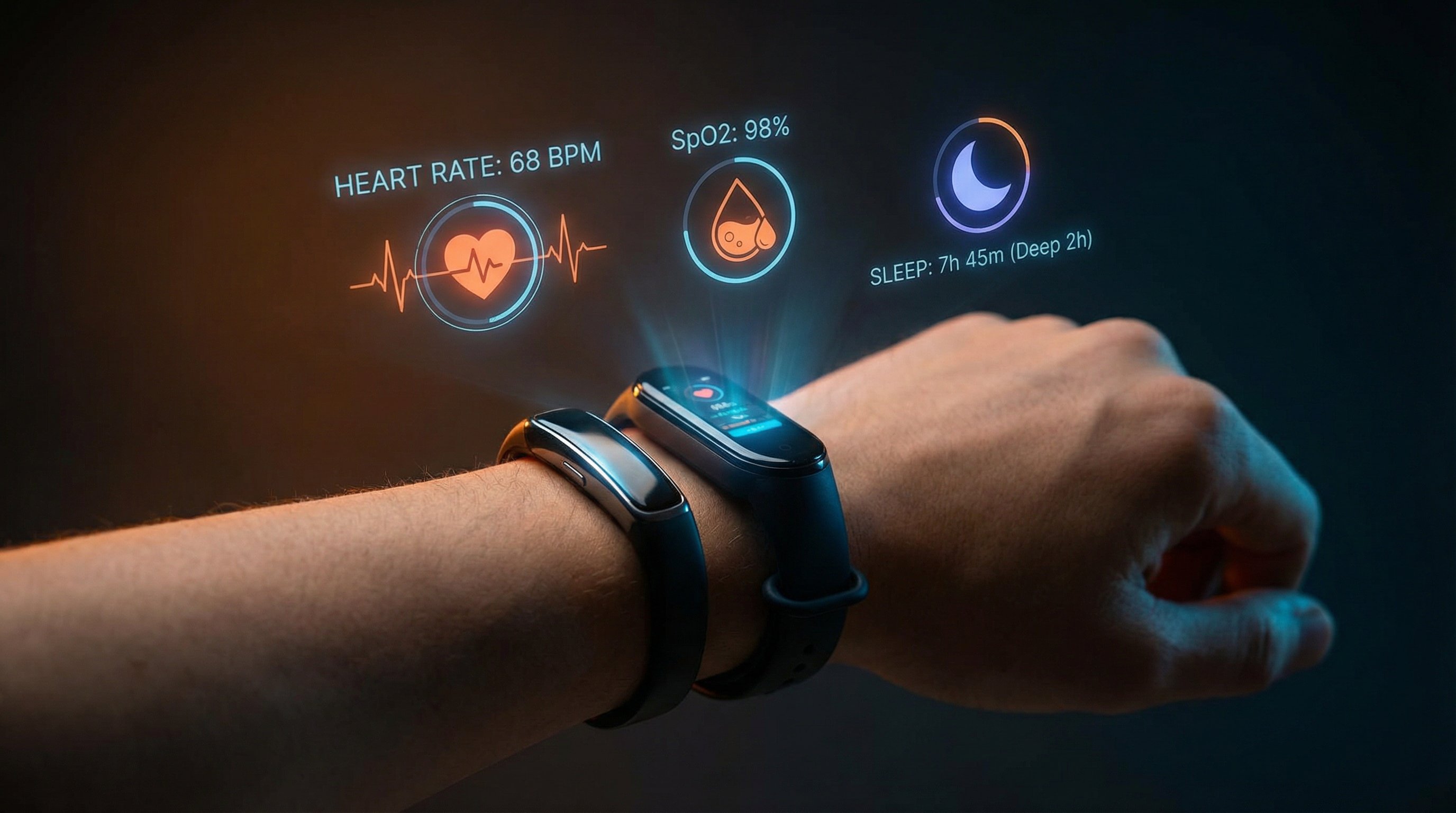
You know that moment when your phone tells you your screen time is up, and you’re like, “Lies”? Well, some people are having the opposite experience: their ring or watch throws up a little red flag, and it turns out… it’s not being dramatic. It’s being life-saving.
The New York Post rounded up a bunch of stories where everyday wearables acted like an early warning system for real medical trouble. One of the wildest is Maeve O’Neil, a 19-year-old Division I lacrosse player at George Washington University, who’d been sick for almost a week and suddenly woke up in the middle of the night feeling horrible. When she checked her Oura Ring data, she saw big jumps in her respiratory rate, resting heart rate, and body temperature—enough that she decided, “Nope, we’re going to the ER.” That decision led to doctors finding Lemierre’s syndrome (a rare but serious complication from a throat infection), double pneumonia, septic emboli, plus COVID-19. She ended up in respiratory failure, spent a week in the ICU, had thoracic surgery to place tubes in her lungs, and says she can’t stop thinking about how differently it could’ve gone if she hadn’t looked at her data that night (NY Post).
Another story: Nicolette Amette, a 44-year-old TV producer in London, noticed her Fitbit showing a resting heart rate around 120 during the day, then spikes up to 140, and one morning it shot to 200–220. She’d been feeling dizzy and exhausted, but the numbers made it impossible to shrug off. An EKG confirmed serious rhythm issues including atrial fibrillation and a type of rapid heartbeat called AV nodal reentry tachycardia, and she ended up needing heart procedures (NY Post).
And it’s not just “heart stuff.” A Houston woman, Sandy Mendez, said an Ultrahuman ring’s cycle tracking showed she rarely ovulated and her sleep data lined up with constant fatigue and palpitations. That gave her the confidence to push for better testing—and she learned her thyroid was swinging between overactive and underactive states (NY Post). The article also notes multiple accounts where people got checked after weird wearable patterns and ended up diagnosed with things like lymphoma and lupus (NY Post).
Why this matters is bigger than “cool gadget trick.” Wearables are basically teaching people what “normal me” looks like. Dr. Jordan Shlain, who runs concierge medical practices, describes wearables as both “rearview mirror and windshield” for your health—showing where you’ve been and hinting at where you might be heading. His point is the baseline: once you know your normal, you can spot your abnormal—like a resting heart rate creeping up for weeks or sleep quietly collapsing (NY Post). That’s a big deal because medicine is still mostly built around symptoms, and symptoms can be late.
But there’s a catch: your ring doesn’t know why you’re off. Even Oura is explicit that it’s not a medical device and not intended to diagnose, treat, cure, monitor, or prevent medical conditions, and you shouldn’t change meds, nutrition, or workouts without talking to a clinician (Oura Help). Shlain puts it bluntly too: a heart rate spike could be atrial fibrillation… or it could be the espresso you had at 3 p.m. Data without context is just noise (NY Post).
The Mornings Take: I love the idea that your wearable is basically a tiny, polite hypochondriac living on your finger—except sometimes it’s right. The win isn’t that a ring “diagnoses” you; it’s that it removes the denial. It turns vague feelings like “I’m probably just tired” into “Okay, why is my resting heart rate 30 points higher than usual?” If you’re going to outsource anything to a gadget, outsource the part where you ignore your body’s check engine light. Then do the grown-up part: call a real doctor.