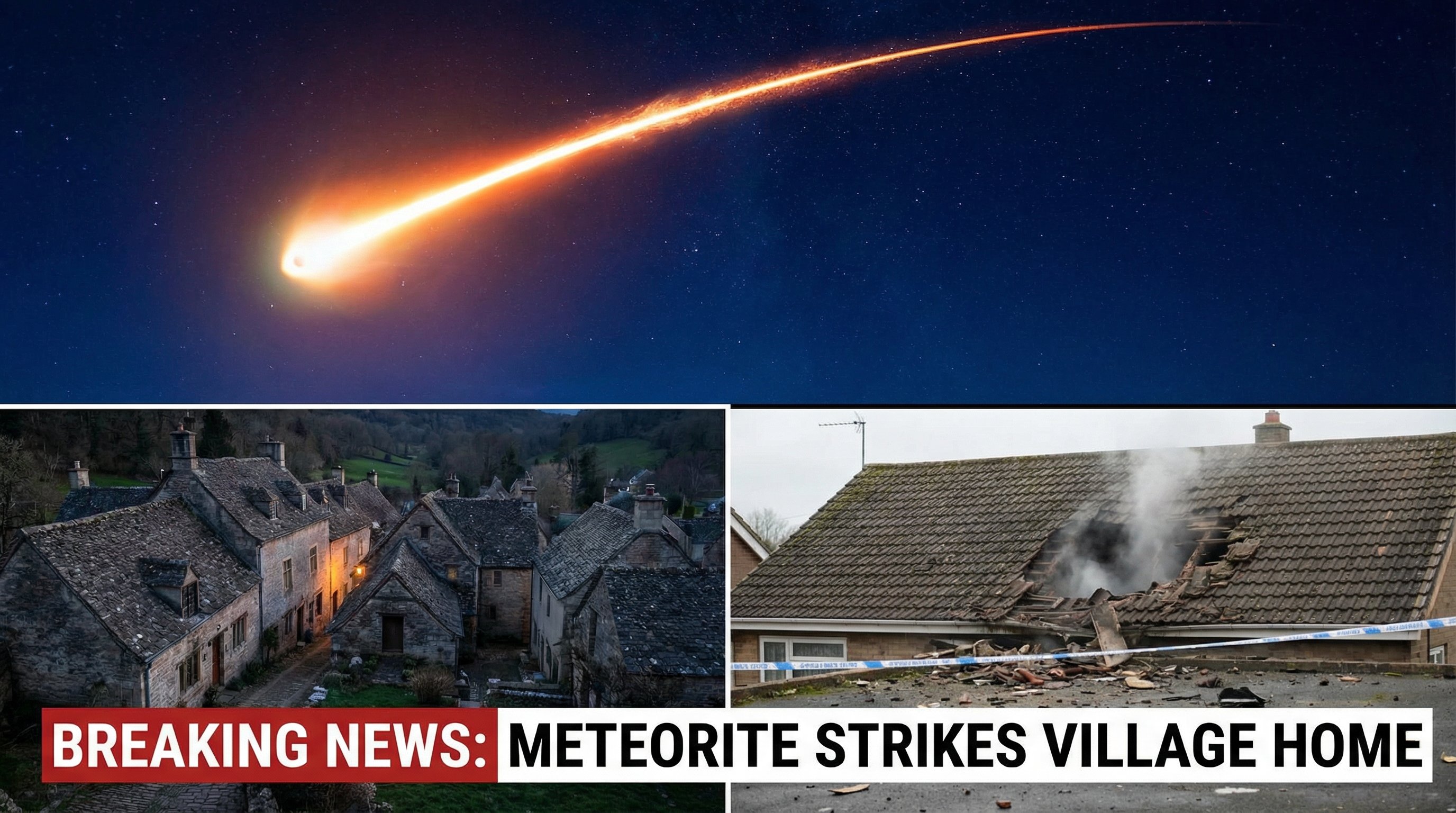
Imagine you're sipping coffee on a Sunday evening in western Europe, and suddenly the sky explodes in a brilliant fireball streaking northeast like the universe just hit the fast-forward button. That's exactly what thousands of people from France to the Netherlands witnessed on March 8, around 7 p.m. local time—a cosmic light show that ended with a bang, literally, right through the roof of a house in Koblenz, Germany.
The show started with a meteoroid, probably a few meters across, slamming into the atmosphere at tens of thousands of miles per hour. It lit up the twilight sky for about six seconds, captured by networks like AllSky7 and over 2,800 eyewitness reports to the International Meteor Organization.Space.com Multiple explosions boomed as it fragmented, showering bits across Rhineland-Palatinate. In Koblenz's Güls district, the largest chunk punched a soccer-ball-sized hole straight through a roof and into an empty bedroom—talk about bad luck, but no one was home, no injuries reported.New York Times Police confirmed it was a \"burnt-up celestial body,\" easing fears of missiles amid global tensions.DW.com
Fragments the size of golf balls and tennis balls rained down, damaging other homes too. Hunters, including one from France, swooped in overnight, snagging pieces possibly from the asteroid belt—maybe HED achondrites or chondrites, pending lab tests.X post by @NicosPanoptikum The European Space Agency's already crunching data from videos and cameras to map the path and origin.ESA Social media lit up with awe-struck clips of the smoky streak and explosions—\"A meteor just decomposed in front of my eyes,\" one poster marveled.
This isn't some once-in-a-millennium freak event. Earth gets pelted by about 17,000 meteorite falls a year, though most are dust or splash into oceans—maybe 1,800 hit land.Space.com meteorite stats House strikes are rarer but not unheard of: cherry tomato-sized rocks have dented roofs in Atlanta last year, New Jersey in 2023, even a doghouse in 2019. These \"hammerstones\" remind us space is active real estate. Scientifically, they're goldmines—preserved snapshots of the solar system's birth 4.6 billion years ago, revealing asteroid compositions, water delivery to early Earth, maybe even organic building blocks for life.NASA Science Koblenz's quick recovery means astronomers get fresh data without weeks of desert hunts.
And get this: homeowners might now wonder if their policy covers \"act of space rocks.\" It's a wild reminder that our blue marble's under constant cosmic rain, mostly harmless but occasionally punching tickets—er, roofs.
Here's our Mornings take: This story's got everything—drama, science, a dash of what-if terror, and zero casualties. It's the perfect wake-up call that the universe doesn't care about your roofing bill, but damn if it doesn't make for a hell of a show. Next time you see a shooting star, maybe glance up and think, 'Hope that's not aimed at my attic.' Cheers to the homeowners with the world's most expensive skylight—and to science for turning oops into discovery.