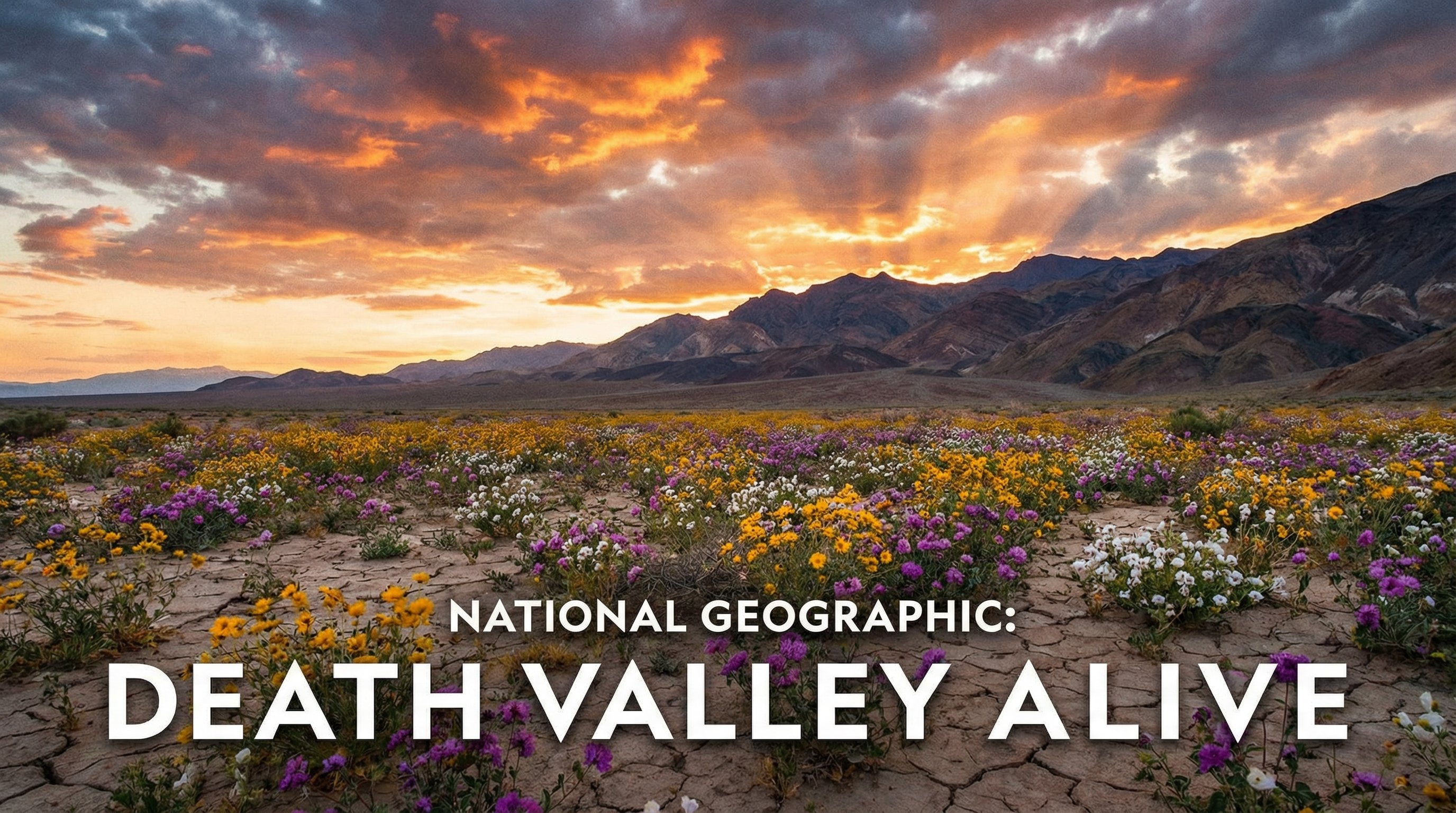
Imagine driving through Death Valley, expecting nothing but cracked earth and scorching heat, and suddenly—bam—fields of gold and purple wildflowers explode across the desert floor. It's like the planet hit the reset button on one of its harshest corners, turning barren badlands into a living painting, and it's happening right now.
Death Valley National Park, the hottest and driest spot in North America, is in the middle of a rare superbloom—the best since 2016. Thanks to an unusually wet fall and winter, with nearly a year's worth of rain dumped since October, including a record 1.76 inches in November alone, dormant seeds that had been chilling underground for decades finally woke up. Warm temps helped too, without the brutal winds or heat that usually wipe them out early. Now, carpets of desert gold—what they call the \"desert sunflower\"—are blanketing the valley, splashed with purple phacelia, brown-eyed primrose, and pink desert five-spot. Park ranger Matthew Lamar put it perfectly: \"This landscape that sometimes people think of as desolate is coming alive with a beautiful palette of colors.\" Visitors like Jackie Gilbert from Las Vegas are flocking there, marveling at the resilience: \"Even in the face of all this adversity, they can still thrive.\"
The bloom kicked off in lower elevations around early March, with prime spots just north of the Furnace Creek Visitor Center, along Badwater Road, and down at Ashford Mill about an hour's drive south. Check the poster at the visitor center for the hot zones—right now, desert gold and primroses are dominating North and South Badwater, phacelia along Highway 190. But hurry: these low spots are expected to fade by mid-to-late March, depending on weather. Higher elevations will keep the party going into April through June. Heads up, though—stick to trails, don't pick anything (it kills future seeds), skip touching the phacelia unless you want a rash, and watch your step for hungry sphinx moth caterpillars munching on primroses.
This isn't just pretty pictures for Instagram. Superblooms like this shatter the myth that deserts are dead zones. Ecologists like Loralee Larios from UC Riverside point out how plants and critters have insane adaptations—surviving decades without water, exploding into life when conditions align just right. Tiffany Pereira from the Desert Research Institute says it's proof of life's persistence in extremes. In a world wrestling with climate whiplash—droughts one year, floods the next—this bloom screams resilience. It also draws crowds, boosting park awareness and local economies, but reminds us to tread lightly so next decade's seeds get their shot.
Look, if Death Valley can throw a flower rave after baking at 130 degrees and sipping rain like it's fine wine, maybe we've got hope for hanging tough too. Grab your shades, hit the road before it's gone—Mother Nature's putting on a show that says life's where you least expect it. Who's in?