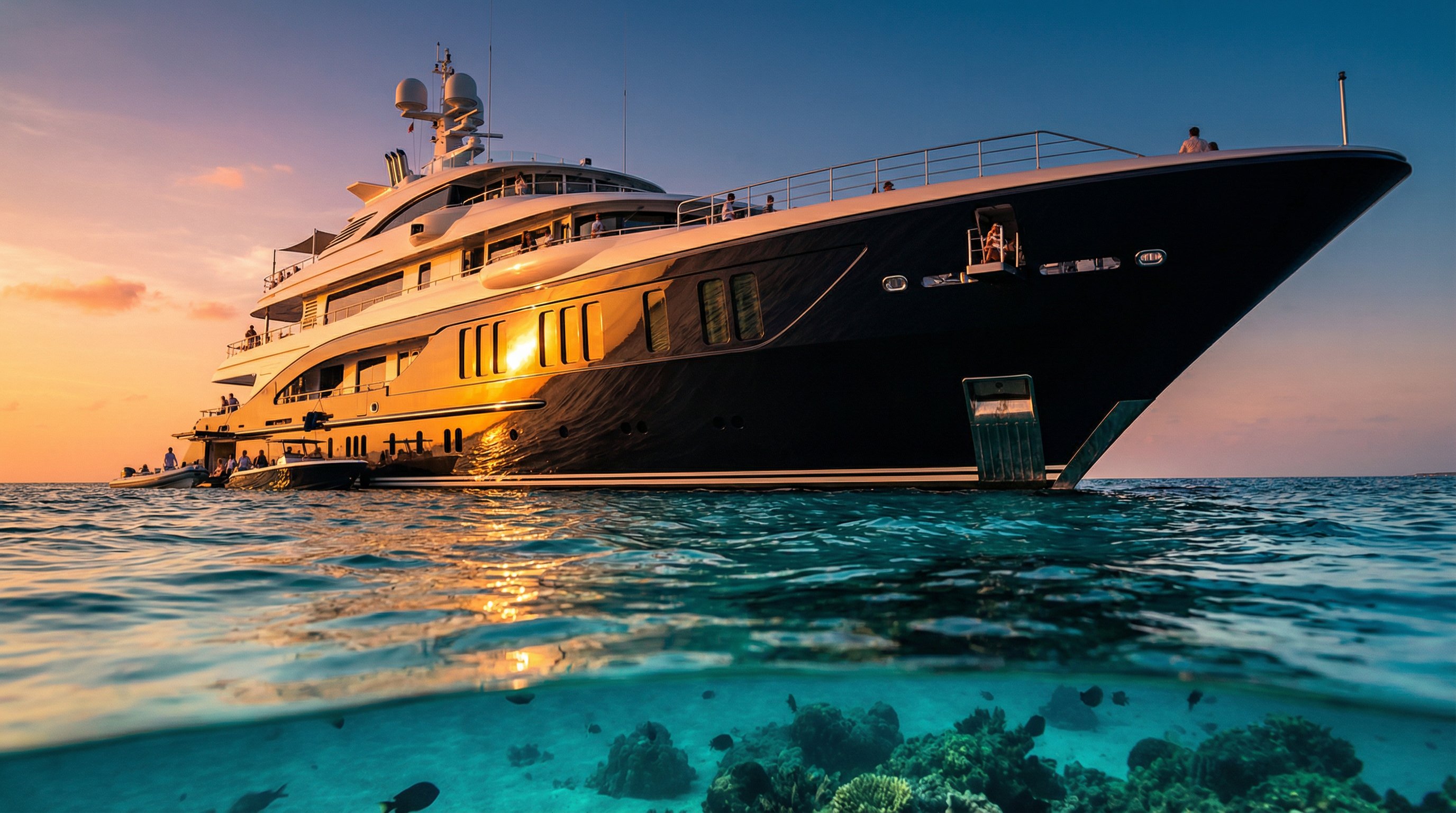
Picture it: you’re floating off Ibiza on a yacht the size of a hotel, the champagne’s basically on a drip… and suddenly the “respectable family man” billionaire starts acting like international waters are a moral loophole.
That’s the gist of a new tell-all vibe story out of the New York Post, based on the experiences of Raissa Bellini, a 37-year-old former superyacht stewardess who says she spent five years working onboard luxury vessels around Mediterranean hot spots like Italy, Spain, Greece, Turkey, and Ibiza. She’s now a model and online personality with a big following, and she’s talking about what it felt like to serve the ultra-wealthy up close.
Bellini’s main point is pretty blunt: when people are rich enough to rent a floating palace, some of them start behaving like consequences are for other people. She says “at sea, some men think the rules don’t apply,” and describes this pattern of wealthy, often married businessmen flipping a switch once they’re offshore. The wedding ring, in her words, becomes “a decoration,” and their polished public image—serious, buttoned-up, family-man energy—can dissolve into boundary-testing with the crew.
The details she shares aren’t “movie villain” dramatic as much as they’re uncomfortable in a very real-world way: men suddenly showing up in the crew areas while she’s working, standing too close, throwing compliments, testing how far they can push. And the thing that makes it feel extra gross is the setting. You’re not at a bar where you can walk out. You’re not at a hotel where security is down the hall. You’re on their boat. Bellini says that’s what changes the whole power dynamic—there’s “nowhere to go,” and you can’t just leave.
She also points to the broader onboard culture: an unspoken expectation of silence and smoothness. From day one, she says crew are essentially taught to keep their heads down, keep it professional, and not create problems—because the entire industry runs on discretion and NDAs, and the clients are the clients. In another interview picked up by the Daily Mirror, she frames it as the sea making attention-seekers bolder, because luxury plus isolation plus alcohol blurs lines fast.
Why does this matter beyond yacht gossip? Because it’s a little case study in how power works when there are no guardrails. Superyachts are basically private micro-societies: wealthy people, staff who depend on tips and references, and a physical environment designed to keep the fantasy intact. In that bubble, bad behavior can become “just part of the job,” which is exactly how workplaces normalize harassment—except here the workplace is in the middle of the ocean.
It also lands in a moment when we’re already talking a lot about wealth, entitlement, and the soft forms of coercion that don’t always look like a crime but still leave people feeling trapped. Bellini’s best line might be her takeaway: money doesn’t change a man, it just removes the filter. That’s not just about billionaires. It’s about what happens to anyone when they’re insulated from consequences.
The Mornings Take: This story is less “look at these outrageous rich people” and more “look how quickly humans adapt to a system where they’re untouchable.” And the creepiest part isn’t the yacht—it’s that the yacht is just a floating metaphor. Put someone in a space where everyone’s paid to smile, nobody can leave, and the rules feel optional, and you find out who they really are. The ocean isn’t what makes people wild; it just makes it harder for anyone to tell them ‘no.’