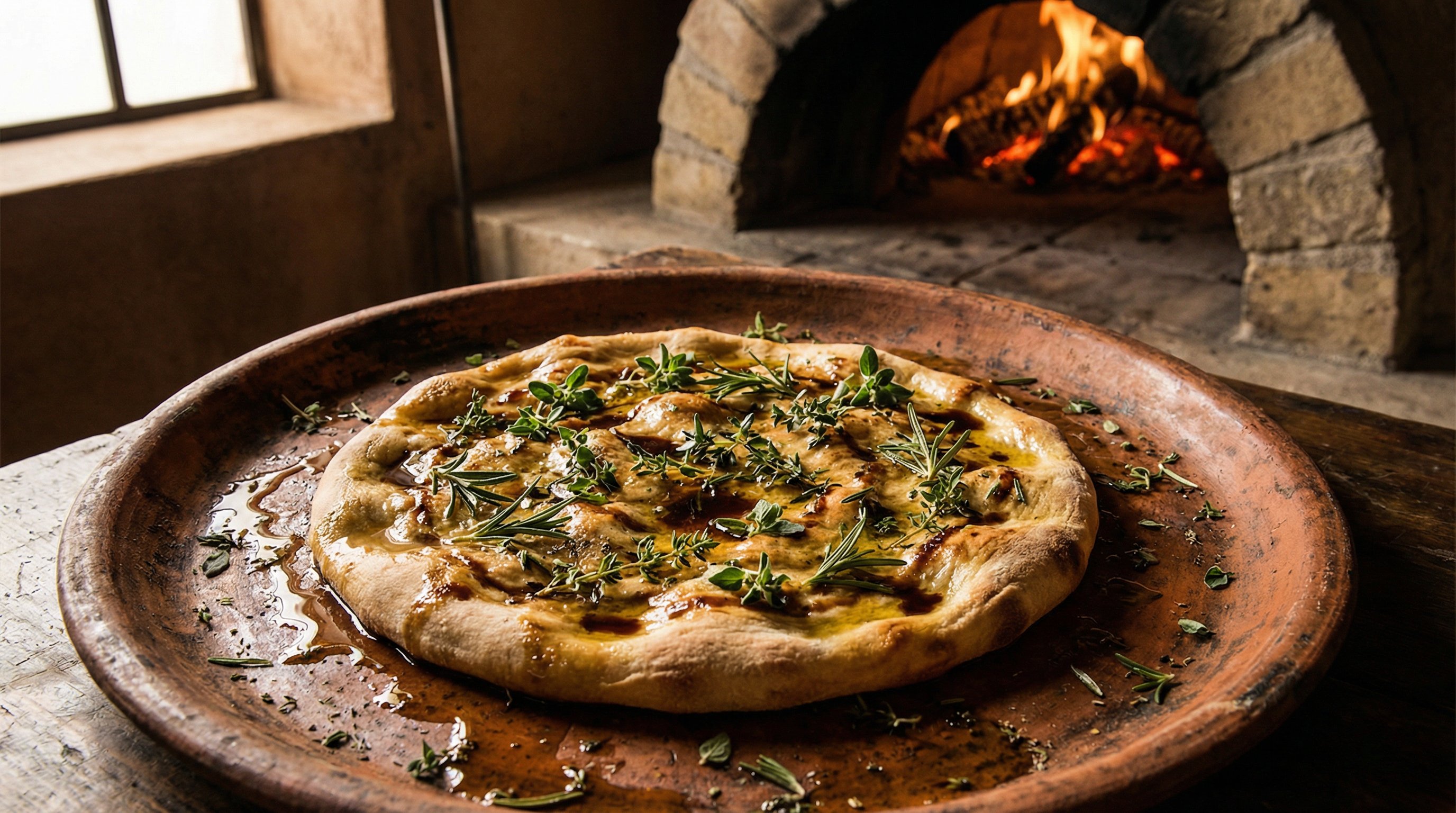
Imagine biting into a pizza that your great-great-great-great-grandparents a thousand times over might actually recognize—no gooey cheese pull, no bright red sauce, just pure ancient chaos on a flatbread. Over in Budapest, Neverland Pizzeria is slinging a limited-edition pie that's straight out of ancient Rome, and it's as wild as it sounds.
Here's the deal: Neverland's crew, led by founder Josep Zara and head chef Gergely Bárdossy, got inspired by a fresco unearthed in Pompeii back in 2023. It shows what looks like a fancy flatbread topped with spices, pomegranate seeds, and dates—think adorea or mensa, not your corner slice BBC Travel. They ditched anything from the New World, like tomatoes and mozzarella, because Romans wouldn't have a clue. The base is ancient grains—einkorn and spelt—with dough boosted by fermented spinach juice since, plot twist, ancient Rome didn't have running water for high-hydration doughs. Toppings? Epityrum, that's an olive paste relished in recipes from Cato the Elder Tasting History, garum (fermented fish sauce that Romans dumped on everything like umami crack) Wikipedia, confit duck leg, toasted pine nuts, ricotta, and a grape reduction for that sweet-savory hit.
Zara told reporters they basically played mad scientist: \"We had to exclude all ingredients that originated from America\" NY Post. Bárdossy wrestled with the dough's 80% water issue, creating something denser but workable. Culinary archaeologist Lisa Roberts says it'd look to us like a wheat-honey-olive oil flatbread with herb pesto and fruits—part of the xenia hospitality tradition where food was art Fox News. It's not pizza as we know it—that came over a millennium later—but a distant ancestor, perfect for Roman elites.
Why care? Food history like this blows up the myth that pizza's some pure Italian invention—it's a mashup of cultures, evolving over centuries. This pie nods to how globalization (or lack thereof) shaped what we eat; Romans had their salty-sweet-savory vibes, like prosciutto-melon or modern pineapple pizza haters' nightmares. It spotlights experimental chefs bridging past and present, using archaeology to rethink \"authentic.\" Plus, in a world of endless food trends, this is a fun reminder that bold flavors aren't new—garum was their sriracha.
And here's our Mornings take: If you're in Budapest, hit Neverland and try this beast—sounds unhinged, but that's the point. Would we order it over a margherita? Probably not daily, as Bárdossy says it's for a \"narrow niche.\" But over coffee, we'd argue it's cooler than another gluten-free cauliflower crust. Pass the garum—history tastes better with a side of curiosity.