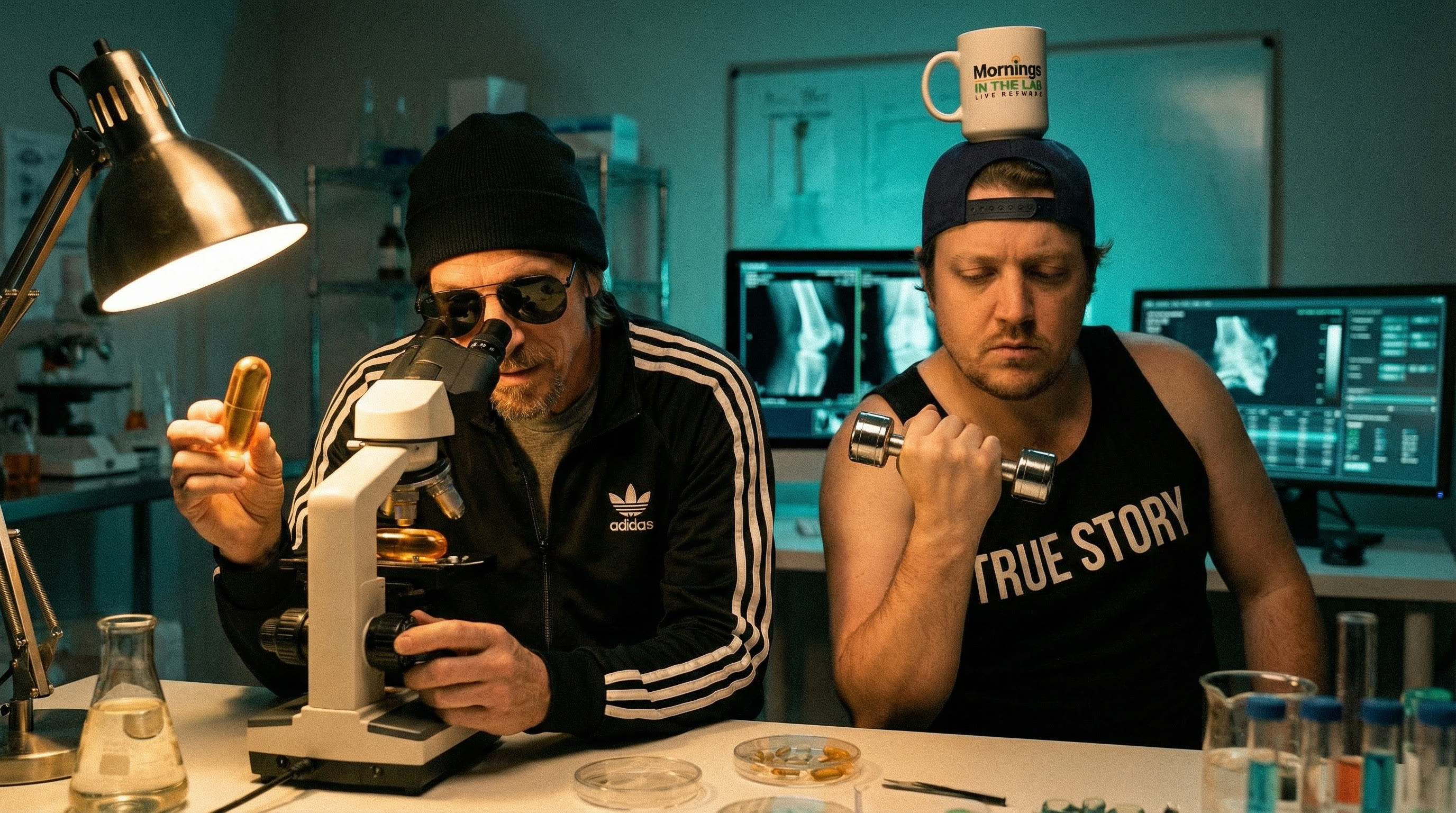
A team at the University of Hong Kong identified the exact protein that acts as the body's exercise sensor: Piezo1. It's the reason your bones get stronger when you move.
When physical force from running, lifting, or walking activates Piezo1 in bone marrow stem cells, it pushes those cells to build bone instead of storing fat. Without Piezo1, exercise does nothing for bones.
The researchers proved this by removing Piezo1 from mice — bone density dropped, fat accumulated in bone marrow, and exercise stopped working entirely. But when they reactivated the protein, bone formation resumed even without movement.
Professor Xu Aimin: "By activating the Piezo1 pathway, we can mimic the benefits of exercise — effectively tricking the body into thinking it is exercising, even in the absence of movement."
The study mapped the exact signaling pathway, giving drug developers a specific molecular target. Osteoporosis affects 1 in 5 men over 50, and bone fractures are a leading cause of disability in older adults.
Published in Signal Transduction and Targeted Therapy (Nature portfolio). The next step: developing a compound that can activate Piezo1 pharmacologically — a true exercise-in-a-pill.
Source: ScienceAlert | ScienceDaily / University of Hong Kong